Measurement
Measurements provide quantitative information about geometry within a 3DSpace. They are used to determine dimensions, distances, angles, and other geometric properties without modifying the underlying 3D data. Measurements are evaluated based on referenced geometry and selected targets within the 3DSpace.
Measurement Types
Measurements are defined by a measurement type and one or more targets. Depending on the selected type and the complexity of the input geometry, a measurement may require additional computation before results are available.
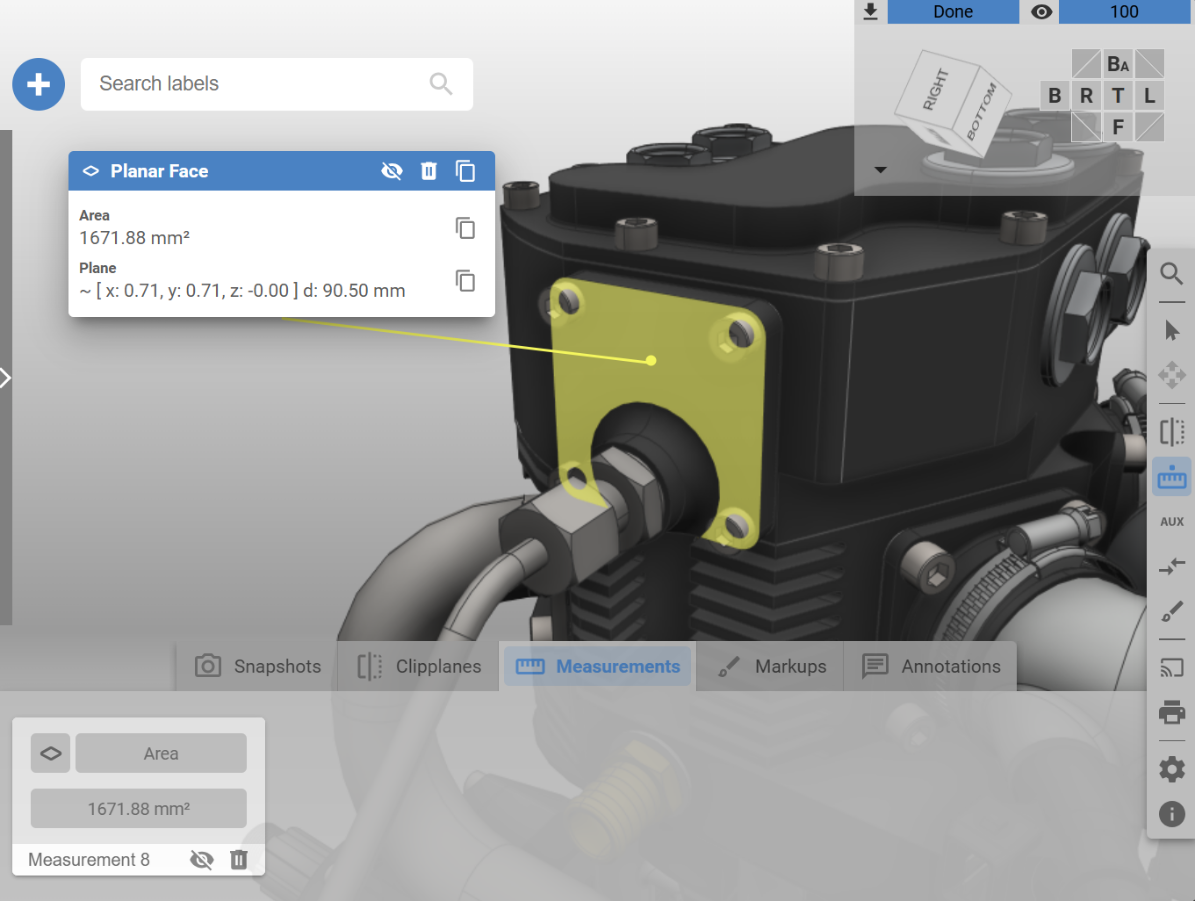
Single Measurement
Single measurements evaluate properties of a single topological entity. They are typically used to retrieve intrinsic characteristics such as length, area, or volume.
Examples include surface area measurements or volume calculations for a part.
Double Measurement
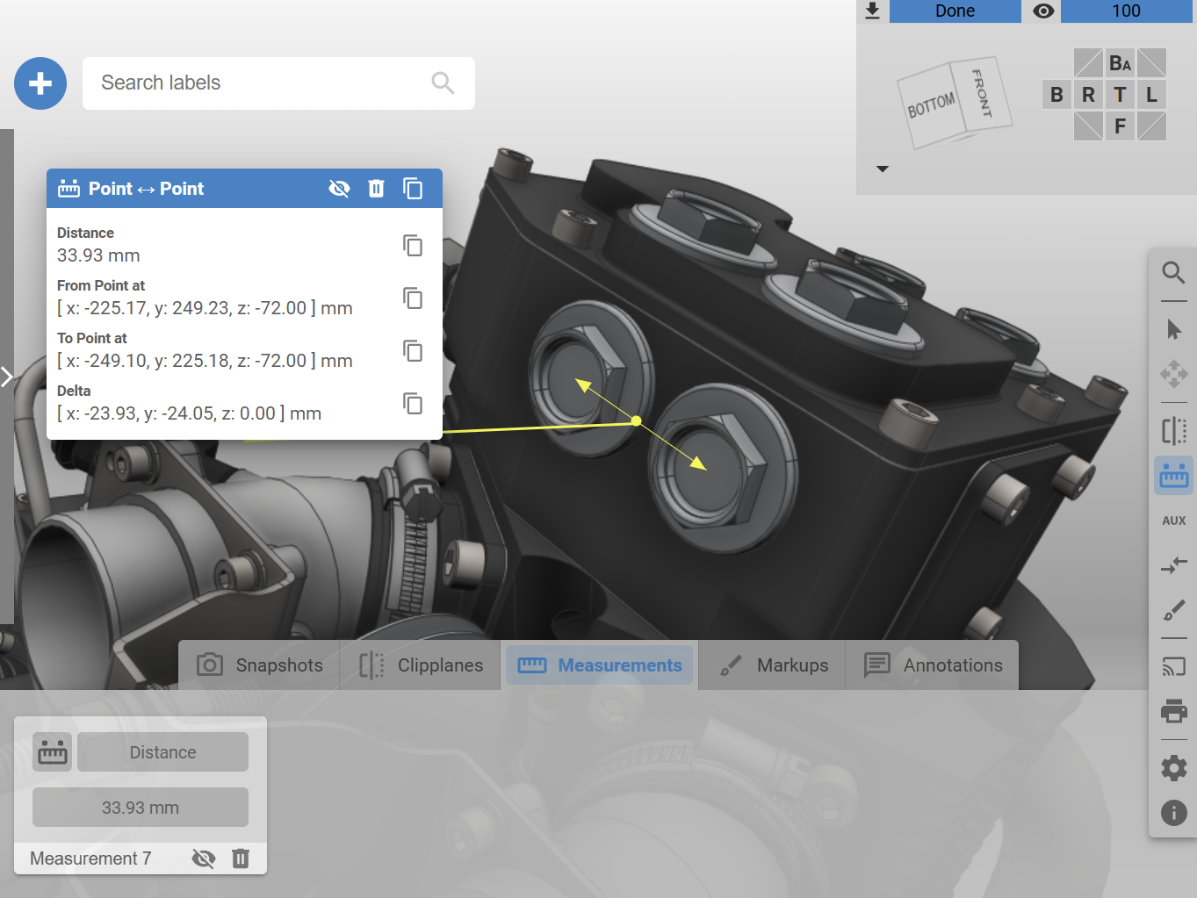
Double measurements evaluate the relationship between two or more topological entities. They are commonly used to determine distances, angles, or offsets between selected elements.
The interpretation of the result depends on the selected measurement type and the combination of input entities.
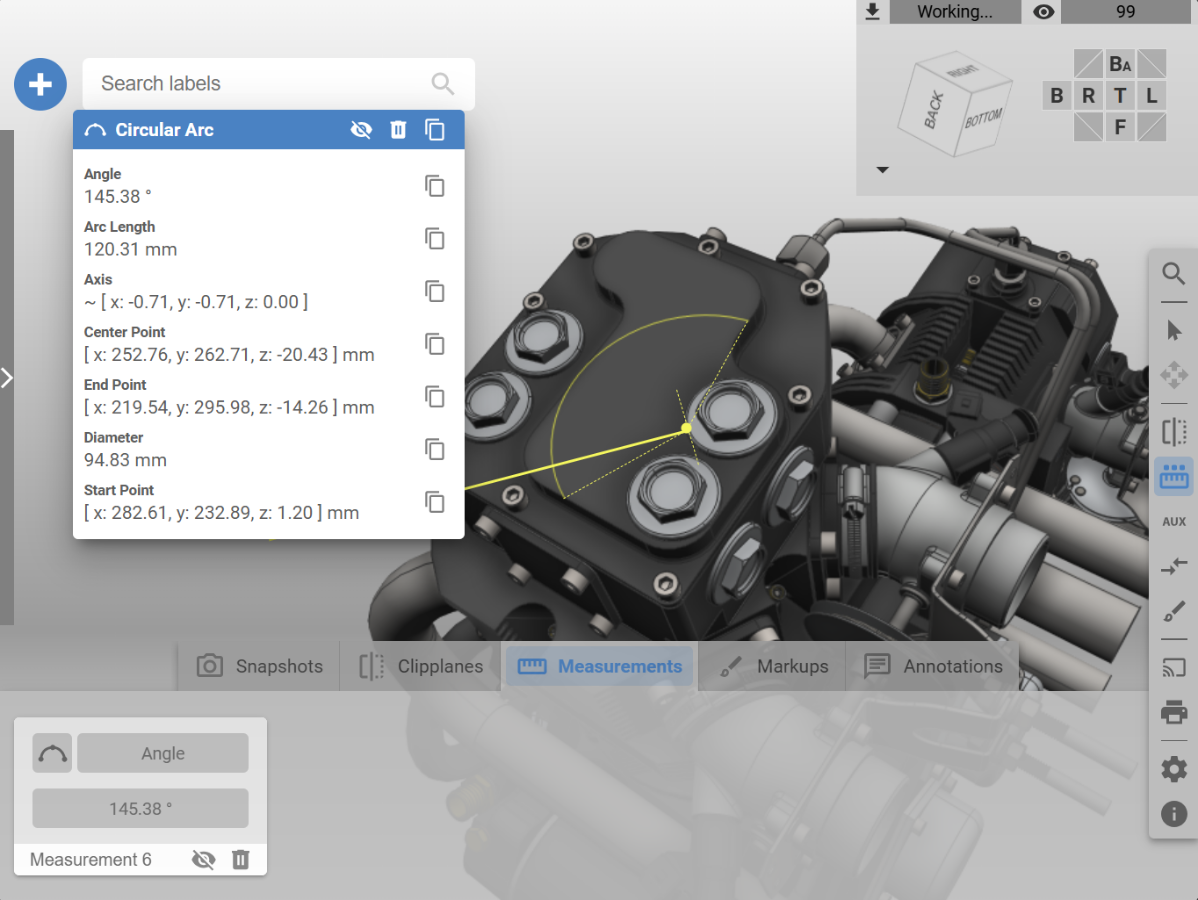
Arc Measurement
Arc measurements are defined by three points in 3D space, typically derived from geometric surfaces. They provide information about circular properties such as center, radius, diameter, circumference, angle, and axis.
Arc measurements are often used to analyze curved geometry or rotational features.